
Introduction
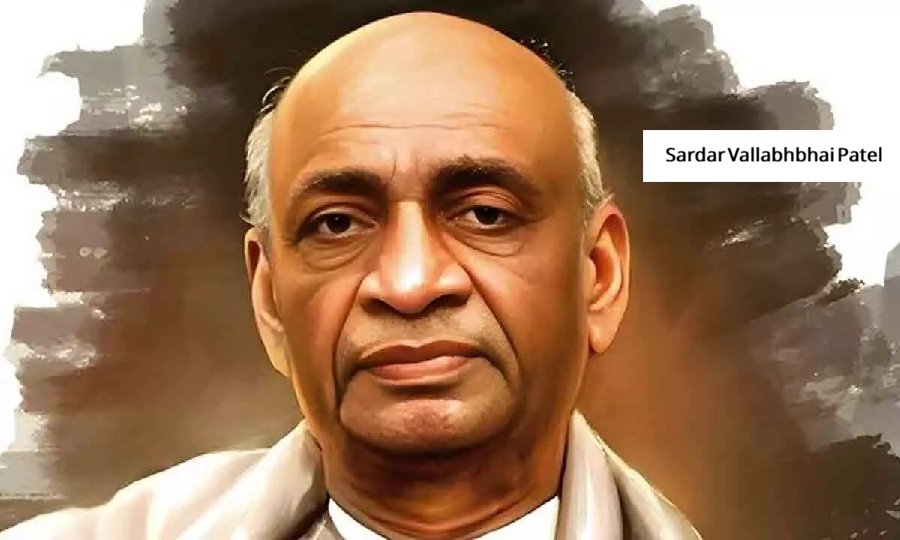
Sardar Vallabhbhai Patel is remembered every one year on 31 October to commemorate the birth anniversary of Sardar Vallabhbhai Patel, one of the most prominent leaders of India’s freedom movement and a key determinant in the political integration of India. He is considerably remembered for his management, intellect, administrative competencies, and contribution to bringing large numbers of princely states into the Indian Union after independence.
Sardar Vallabhbhai Patel was born on 31 October 1875 in Nadiad, Gujarat. He was knowledgeable as a legal professional and later became deeply involved in India’s conflict for independence under the leadership of Mahatma Gandhi. His participation in movements at the forefront of the Kheda Satyagraha and Bardoli Satyagraha established him as an influential mass leader.
After India became independent in 1947, Patel served as India’s first Deputy Prime Minister and Minister of Home Affairs. His efforts in the direction of political integration accomplished an important function in shaping the territorial and administrative concord of undivided India.
In 2014, the Government of India declared 31 October as National Unity Day (Rashtriya Ekta Diwas) to commemorate Patel’s birth anniversary and spotlight the significance of countrywide harmony and integrity.
When Is Sardar Vallabhbhai Patel Celebrated?
Sardar Vallabhbhai Patel is widely celebrated annually on 31 October. The day marks Patel’s birth anniversary and is also known as National Unity Day.
Schools, colleges, authorities, institutions, and several corporations organize programs to keep in mind his contribution to India’s history. Activities can include institutional spirit pledges, speeches, essay-writing competitions, quizzes, debates, cultural programs, and attention activities.
The occasion offers an opportunity to speak about the values associated with Patel’s public life, which consist of national integration, public service, state affairs, leadership, and administrative duty.
Who Was Sardar Vallabhbhai Patel?
Sardar Vallabhbhai Patel became an Indian prison professional, freedom fighter, political chief, and statesman. He became one of the senior leaders of the Indian National Congress in the course of the independence movement.
Patel, to begin with, pursued a legal profession and emerged as a barrister. However, his involvement in India’s freedom war frequently emerged as the essential focus of his life.
His leadership at some unspecified time in the destiny of close by actions regarding farmers tested his ability to bring people together and negotiate with the government. His feature in the Bardoli Satyagraha earned him the popular title “Sardar,” which means leader or chief.
Patel later ended up as a vital member of India’s Constituent Assembly and played a main role in the status quo of the executive form of the newly independent state.
Early Life of Sardar Vallabhbhai Patel
Vallabhbhai Patel was born on 31 October 1875 in Nadiad, in present-day Gujarat. He grew up in a farming family and completed his training in Gujarat.
Patel confirmed large strength of will in pursuing his education and career. He studied law and finally travelled to England to teach as a barrister. After returning to India, he established a cooperative.
His early experience helped increase the organizational and administrative skills that later became crucial at some unspecified time in the future of his political career.
Sardar Patel and India’s Freedom Movement
Patel’s political adventure has ended up cautiously associated with Mahatma Gandhi and the Indian National Congress.
He participated in vital moves ioppositionn to British rule and has turned out to be especially influential among farmers and regular residents.
Kheda Satyagraha
The Kheda Satyagraha of 1918 has turned out to be one of the crucial early actions associated with Patel. Farmers in Kheda faced hard situations and sought relief from land revenue demands.
Patel worked with Gandhi and close by leaders to organize the farmers. The motion have turn out to be an essential example of nonviolent resistance and collective action.
Bardoli Satyagraha
The Bardoli Satyagraha of 1928 became a major milestone in Patel’s public life. Farmers in Bardoli faced an increase in land taxes.
Patel prepared the motion with care and emphasised peaceful resistance. The advertising and marketing campaign in the end ended in a settlement favorable to the farmers.
Following the fulfillment of the movement, Patel became widely known as Sardar Patel.
Patel’s Role inside the Indian National Congress
Sardar Patel held several crucial responsibilities in the Indian National Congress. He came to be recognized for his organizational competencies and sensible techniques for political control
He worked carefully with one of a kind vital leaders of the freedom movement. Although leaders from time to time differed on political strategies and priorities, Patel remained a crucial determinant inside the Congress business enterprise.
His capability to mobilize human beings and manage organizational subjects made him an influential chief at some point of the struggle for independence.
Sardar Patel’s Contribution After Independence
India acquired independence on 15 August 1947; however the newly unbiased u. S . Confronted remarkable political and administrative disturbing conditions.
One of the most essential traumatic conditions have become the integration of numerous princely states into the Indian Union.
Patel have emerge as India’s first Deputy Prime Minister and Home Minister. Working with officials and political leaders, especially V. P. Menon, he played a massive role in negotiating the accession and integration of princely states.
The work involved global participants from his own family, negotiations, and, in certain cases, extra-complex measures. The integration of these territories became a sizeable development in the formation of current India.
Why Is Sardar Vallabhbhai Patel Called the Iron Man of India?
Sardar Patel is popularly remembered as the “Iron Man of India.” The title shows his popularity for dedication, strong management, and firmness in coping with difficult political and administrative conditions.
His technique for countrywide integration and his capability to take difficult decisions contributed to this enduring image.
The call is specifically related to his position within the integration of princely states and his dedication to preserving India’s cohesion after independence.
National Unity Day and Sardar Patel
National Unity Day, or Rashtriya Ekta Diwas, is observed on 31 October. It was added in 2014 to commemorate Sardar Patel’s birth anniversary.
The day emphasizes the significance of harmony, integrity, and cooperation among residents.
Government establishments and academic agencies may also set up events that consist of
| Activity | Purpose |
|---|---|
| Unity Pledge | Encourage commitment to national unity |
| Run for Unity | Promote the message of togetherness |
| Essay Competition | Encourage students to study Patel’s contribution |
| Quiz Competition | Improve awareness of Indian history |
| Speech Programs | Discuss national integration |
| Cultural Events | Promote social and cultural harmony |
| Seminars | Explore Patel’s political and administrative legacy |
Statue of Unity
One of the maximum distinguished cutting-edge-day memorials associated with Sardar Patel is the Statue of Unity in Gujarat.
Standing close to the Sardar Sarovar Dam inside the Kevadia region, the monument became inaugurated on 31 October 2018. It became created in honor of Patel and his contribution to India’s cohesion.
The Statue of Unity has become an critical traveler and commemorative excursion spot in Gujarat.
Important Facts About Sardar Vallabhbhai Patel
The following desk offers a brief assessment of vital statistics:
| Information | Details |
|---|---|
| Full Name | Vallabhbhai Jhaverbhai Patel |
| Popular Name | Sardar Patel |
| Date of Birth | 31 October 1875 |
| Birthplace | Nadiad, Gujarat |
| Profession | Lawyer and political leader |
| Major Association | Indian National Congress |
| Famous Title | Iron Man of India |
| Important Movements | Kheda Satyagraha and Bardoli Satyagraha |
| Position After Independence | Deputy Prime Minister and Home Minister |
| National Unity Day | 31 October |
| Statue of Unity | Gujarat |
| Bharat Ratna | Awarded posthumously in 1991 |
| Date of Death | 15 December 1950 |
Sardar Patel’s Role in the Integration of Princely States
At the time of independence, British India was divided into areas at once administered by using way of the British and numerous princely states. The destiny political dating of those princely states with unbiased India turned into an essential difficulty.
Patel, as Home Minister, worked in the route of bringing the princely states into the Indian Union. He worked cautiously with V. P. Menon and used negotiations, agreements, and political persuasion to build up accession in lots of instances.
The integration method become complex and differed from one nation to any other. Some rulers agreed to accession pretty speedy, whilst others required remarkable negotiations.
The eventual integration of maximum princely territories changed into a primary step in developing a unified political framework for India.
Sardar Patel and Civil Services
Patel additionally accomplished an important characteristic in putting in India’s placed up-independence administrative framework.
He supported the continuation and improvement of expert civil services in unbiased India. His perspectives emphasised the importance of an unbiased and capable administrative system for maintaining countrywide team spirit and effective governance.
The Indian Administrative Service (IAS) and Indian Police Service (IPS) later have become crucial additives of India’s All India Services framework.
Patel’s help for sturdy institutions remains an crucial a part of discussions about his administrative legacy.
How Schools and Colleges Celebrate Sardar Vallabhbhai Patel
Educational institutions often use Sardar Patel as an possibility to teach university college students approximately Innationwidenationwidem motion and the machine of countrywide integration.
Common activities include essay competitions, drawing contests, debates, speeches, quizzes, poster-making, and special assemblies.
Students can also be encouraged to explore diverse topics including harmomanagementmanagementvariety, accountable citizenship, manage, and India’s constitutional values.
Teachers can offerwhilen foplacingplacing’s ancient function even as also setting his contributions inside the broader context of India’s independence movement and the artartworkother national leaders.
Importance of Sardar Vallabhbhai Patel
Sardar Vallabhbhai Patel Jayanti has historical and civic importance because it connects Patel’s debirthnniversary with the wider idea of countrywide concord.
The occasion encourages people to take a look at the stressful situations faced by the useful useful resource of India throughout the transition from colonial rule to independence. It moreover affords the possibility to recognize how political integration and administrative institution-building contributed to the improvement of the modern Indian kingdom.
For college students, the day may bepparticularlybeneficial for struggleg apdia’s freeprincely-statee Constituent Assembly, princely-country integration, and the early years of independence.
Values Associated With Sardar Patel
Patel’s public life is often related to numerous tendencies and standards.
Leadership: Patel tested organizational control for the duration of foremost political and social movements.
Determination: His artwork eventually of the Kheda and Bardoli movements showactionaction dedication to organizedd political motion.
National Integration: His post-independence paintings centered notably on integrating territories into the Indian Union.
Administrative Responsibility: As Home Minister and Deputy Prime Minwithwithter, he turned out to be concerned in crucial matters concerning the enterprise and protection of the new state.
Public Service: His transition from a fulfillingpromptedion to the freedom movement contemplated his involvement in public affairs.
Sardar Vallabhbhai Patel Quotes and Messages
On Sardar Vallabhbhai Patel, people often share messages focusing on team spirit, integrity, cooperation, and responsible citizenship.
Ann appropriate message can emphasize that India’s strength comes from its variety,, further strengthened by its shared constitutional and national institutions.
For faculty applications, university college students can prepare speeches explaining Patel’s contribution to India’s freedom movement and the mixture of princely states in place of restricting the occasion to inspirational slogans.
Difference Between Sardar Patel and National Unity Day
Although both days are observed on 31 October, the terms have barely onanyn eacommon in termsf a type emphasis.
| Term | Meaning |
|---|---|
| Sardar Vallabhbhai Patel Jayanti | Birth anniversary of Sardar Vallabhbhai Patel |
| National Unity Day | National observance dedicated to promoting unity and integrity |
| Date | 31 October |
| Main Historical Connection | Birth anniversary of Sardar Patel |
| Common Theme | National unity and integration |
Frequently Asked Questions About Sardar Vallabhbhai Patel
When is Sardar Vallabhbhai Patel celebrated?
Sardar Vallabhbhai Patel Jayanti is broadly diagnosed each 12 months on 31 October, marking the birth anniversary of Sardar Vallabhbhai Patel.
Why is 31 October celebrated as National Unity Day?
31 October is observed as National Unity Day to commemorate the birth anniversary of Sardar Vallabhbhai Patel and emphasize the importance of countrywide concord and integrity.
When was Sardar Vallabhbhai Patel born?
Sardar Vallabhbhai Patel was born on 31 October 1875 in Nadiad, Gujarat.
Why is Sardar Patel called the Iron Man of India?
He is popularly called the Iron Man of India because of his popularity for firm control, strength of will, and his maximum essential function within the political integration of India after independence.
What modified into Sardar Patel’s role after independence?
Patel served as India’s first Deputy Prime Minister and Home Minister. He completed a most important feature in the integration of princely states and contributed to the development of India’s administrative tools
What is the Statue of Unity?
The Statue of Unity is a massive statue dedicated to Sardar Vallabhbhai Patel in Gujarat. It was inaugurated on 31 October 2018.
When did Sardar Vallabhbhai Patel die?
Sardar Vallabhbhai Patel died on 15 December 1950 in Bombay, now Mumbai.
When was SardaPatel awarded the Bharat Ratna?
Sardar Vallabhbhai Patel was posthumously awarded the Bharat Ratnan 1991.
Conclusion
Sardar Vallabhbhai Patel is acritical event for remembering one of the crucial figures in India’s independentovement and the early years of impartial India. Celebrated on 31 October, the day commemoraalso observedalso observedh anniversary and is likewise leadership inleadership inDay.From his control over the path of the Kheda and Bardoli movements to his art work as India’s first Deputy Prime Minister and Home Minister, Patel performed a crucial role at several essential stages of India’s modern-day history. His contribution to the mixture of princely states stays one of the most massive factors of his political legacy.